

Cultural Outcomes
The Cultural Outcomes Theme ensures First Nations knowledges and science is included in managing environmental water.
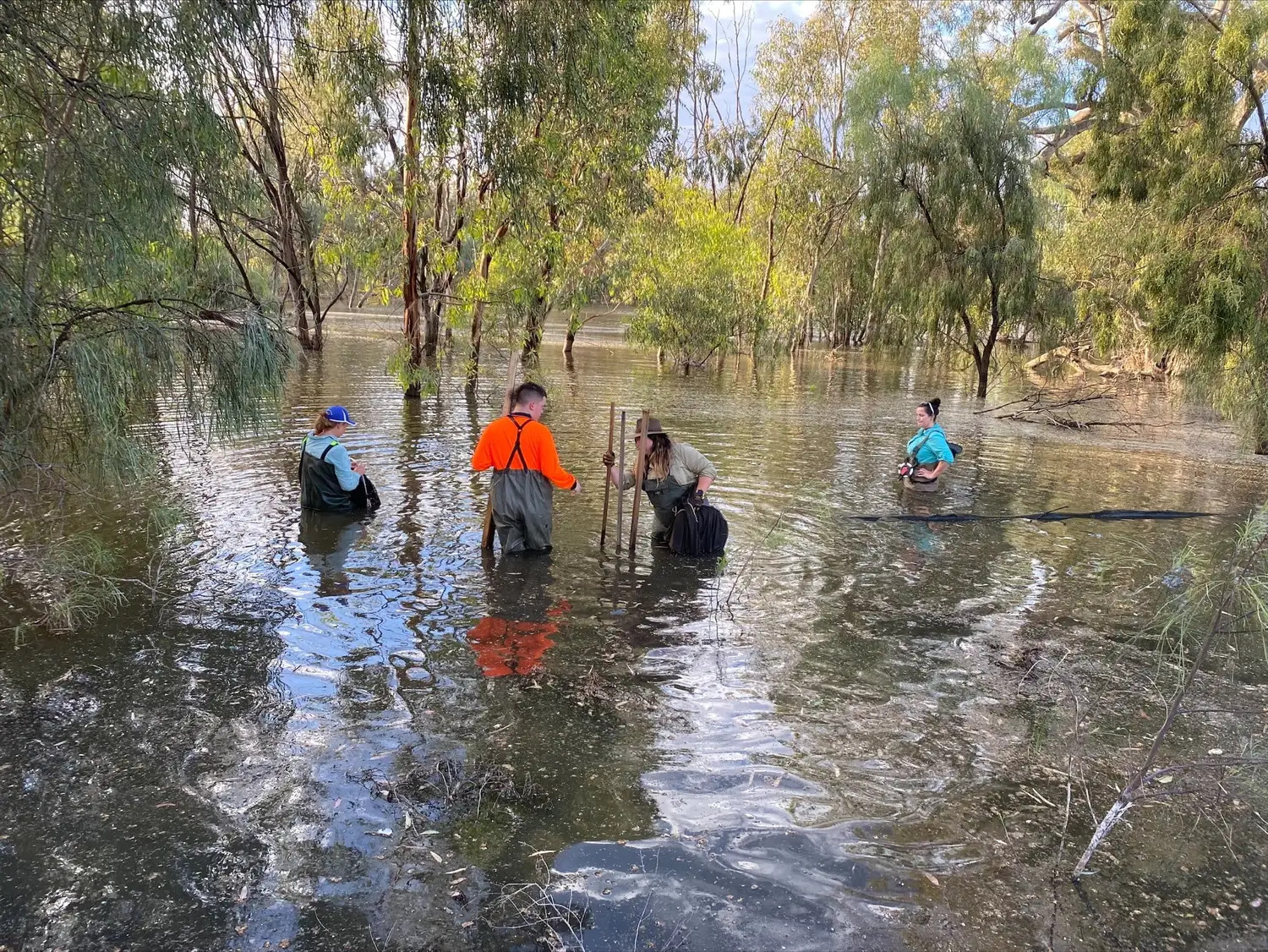
Image: Ral Ral Creek at Calperum Station provided a living classroom to bring together traditional knowledge with contemporary flow and ecology research. Photo credit: South Australian Research and Development Institute
Introduction
Cultural outcomes help people meet their cultural obligations to care for Country. Cultural outcomes can be living things, special places or important activities. This theme evaluates how Commonwealth environmental water supports cultural outcomes so people can keep Country healthy.
For the Flow-MER Program , a ‘cultural outcome from environmental watering’ is a cultural value that First Nations groups say is influenced by environmental water.
The Cultural Outcomes Theme embeds cultural outcomes as key considerations in managing environmental water. It focuses on finding which cultural outcomes are linked to water use and helping water managers include them in their planning. This way, cultural outcomes can be looked at alongside environmental outcomes, and both can be reported and reviewed more clearly in the future.


Evaluation
The Cultural Outcomes Theme will evaluate First Nations outcomes across the Basin. It collaborates with Area-scale themes, particularly with cultural advisors and the Cultural Network.
The key evaluation question at the Basin scale is ‘How has Commonwealth environmental water contributed to cultural outcomes?’. These outcomes are usually specific cultural values that can be influenced by Commonwealth environmental water. They are classified into:
- cultural indicators (living things)
- cultural places (locations)
- cultural activities (things people do)
Evaluating cultural outcomes will focus on how effectively cultural values are included in the delivery, monitoring and evaluation of Commonwealth environmental water.
Ongoing participation with the Cultural Network
The Cultural Outcomes Team plays an active role in the Cultural Network. This network collaborates across the Area-scale projects and interacts with cultural advisors and project managers across the Basin.
Development of research projects
The Cultural Outcomes Team is scoping research projects to embed First Nations people, knowledge and science in environmental water management.

Our Team
CSIRO has been engaged by the CEWH to evaluate the contribution of Commonwealth environmental water to achieving Cultural Outcomes.

CSIRO

University of Canberra
Partners

Environmental Systems Solutions
.jpg)

.avif)
.avif)

